Heart failure is a chronic condition that has a significant impact on patients’ lives and is associated with a high risk of hospitalization and mortality, particularly in medically underserved areas where access to specialized care is limited. In this context, remote management (RM) programs are attracting growing interest as a means to improve follow-up and clinical outcomes.
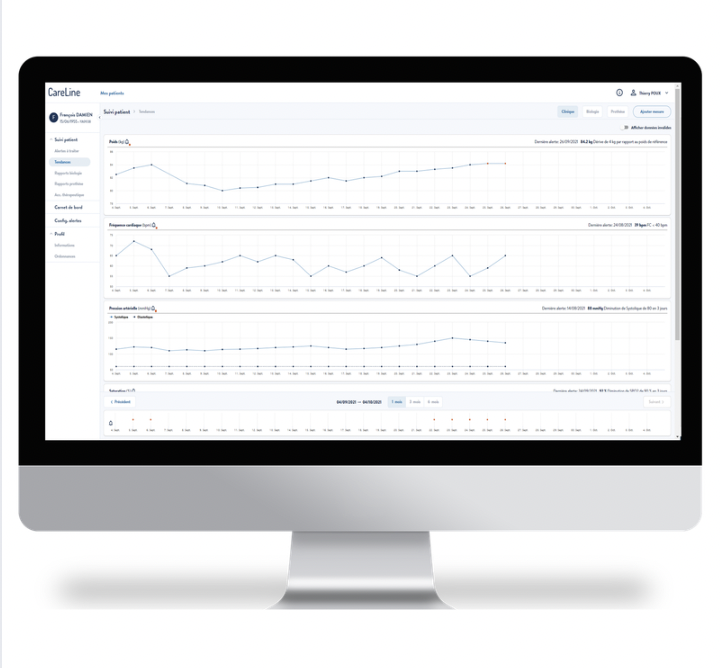
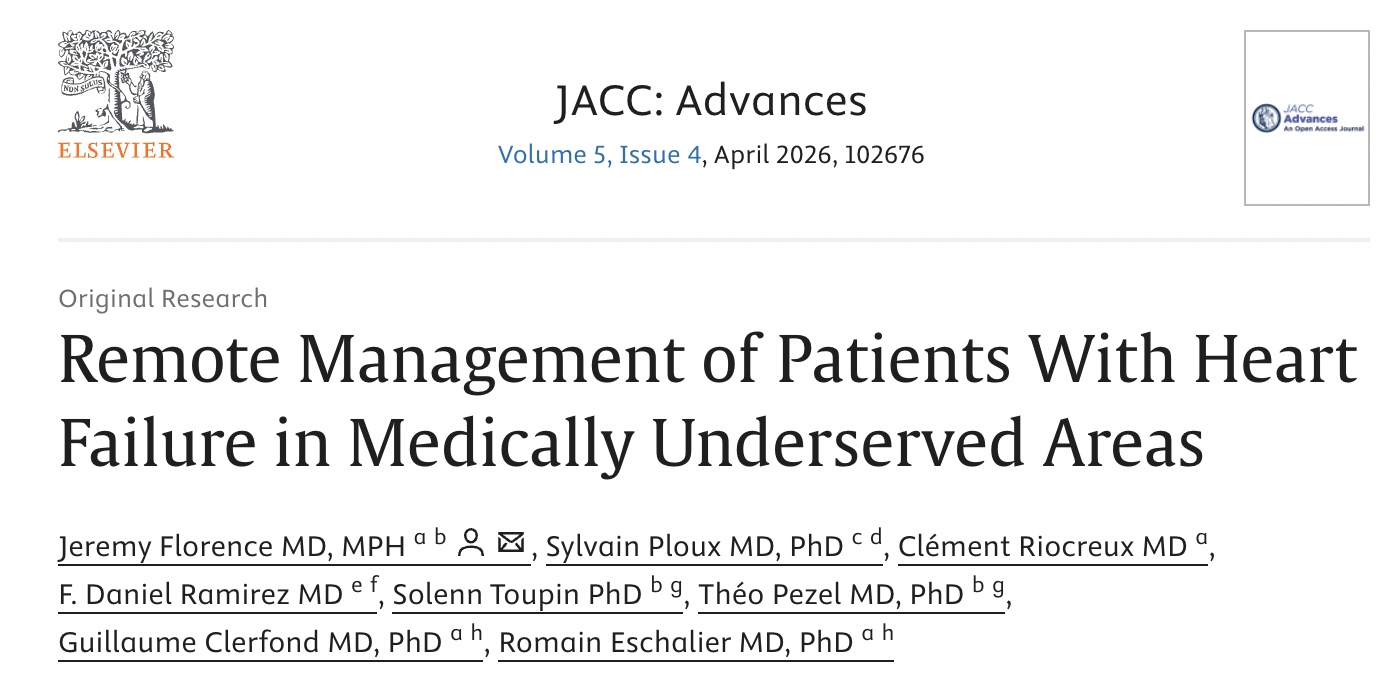
The study by Florence et al. 2026, a French multicenter study published on March 19, 2026, evaluated the efficacy of a structured telemonitoring program (multiparametric monitoring, daily reassessment, and remote management of exacerbations) in 1,040 patients with heart failure, 32% of whom resided in medically underserved areas. The study relied on the regular collection, via CareLine Solutions, of clinical data (weight, blood pressure, heart rate), laboratory data (BNP/NT-proBNP, renal function, electrolytes), symptom reports, and data from implantable cardiac devices, with centralized analysis by a specialized team.
Over a median follow-up of 20 months, the combined rate of all-cause mortality and unplanned hospitalizations was 13.7% per year—similar to the HERMeS study—and was significantly lower than the 30–40% hospitalization rate reported in comparable populations not enrolled in a telemonitoring program. Most importantly, for this composite endpoint, no significant difference was observed between patients living in medically underserved areas and those living outside these areas, provided they benefited from the same structured, multiparametric telemonitoring program via CareLine IC. After adjusting for the main prognostic factors, residence in a medically underserved area did not appear to be a factor associated with the risk of an event.
These results show that the benefits of a structured, multiparametric telemonitoring program are observed despite a lack of local medical support, which is inherent to these regions, and despite initially suboptimal baseline treatment (patients from medically underserved areas were, in fact, prescribed fewer renin–angiotensin–aldosterone system inhibitors). Close monitoring, early detection of signs of decompensation, and the ability to rapidly adjust treatments appear to compensate for limitations in access to local care.
Beyond demonstrating efficacy, this study highlights the potential of structured, multiparametric telemonitoring solutions to reduce regional disparities in access to care. By providing specialized expertise remotely, these systems help ensure a safe care pathway for the highest-risk patients while limiting the need for hospitalizations.
Thus, remote care via telemonitoring emerges as a relevant organizational model for the management of heart failure, with significant implications for public health, healthcare system efficiency, and equitable access to treatment.
Authors: Jeremy Florence, Sylvain Ploux, Clément Riocreux, Daniel Ramirez, Solenn Toupin, Théo Pezel, Guillaume Clerfond, Romain Eschalier.
The full article is available here